

If you are trying to identify which documents you have received in the Power of Sale or Foreclosure process, you can compare them with the example documents provided on this page. These examples are real Ontario Power of Sale and Foreclosure documents, with all names, addresses, and contact information removed and highlighted in orange for confidentiality. By reviewing these examples, you can better understand your own documents and the steps involved in each process. In addition, all unique identification codes and numbers have been replaced with a generic number code. I.e., 12-123456.
The Power of Sale and Foreclosure processes share many of the same documents. However, the Statement of Claim document must clearly indicate on the first page whether the legal action is a Power of Sale or Foreclosure. Be conscious that some documents may have slightly different titles. For example, “Notice of Possession” and “Notice Demanding Possession” are both valid titles for a Notice of Possession document.
Need advice? We have you covered. Call 416-499-2122 or email jonathan@powerofsalesontario.ca. Need private lending advice? Check out Mortgage Broker Store.
Document List
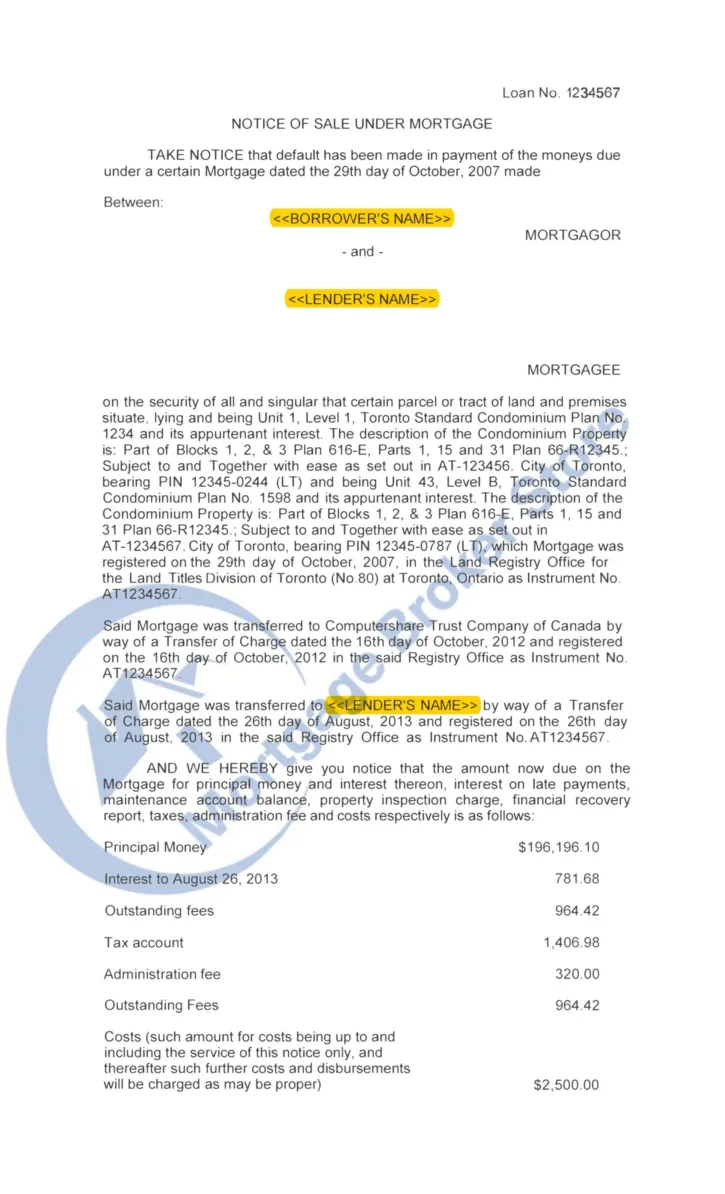
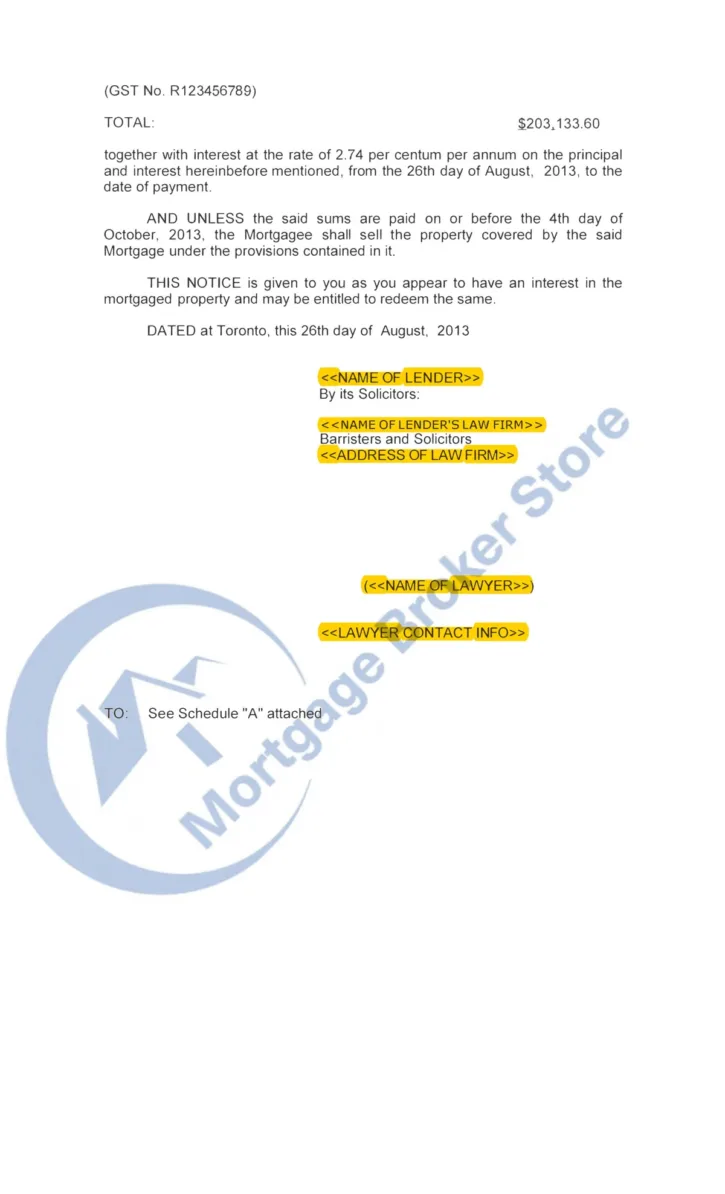
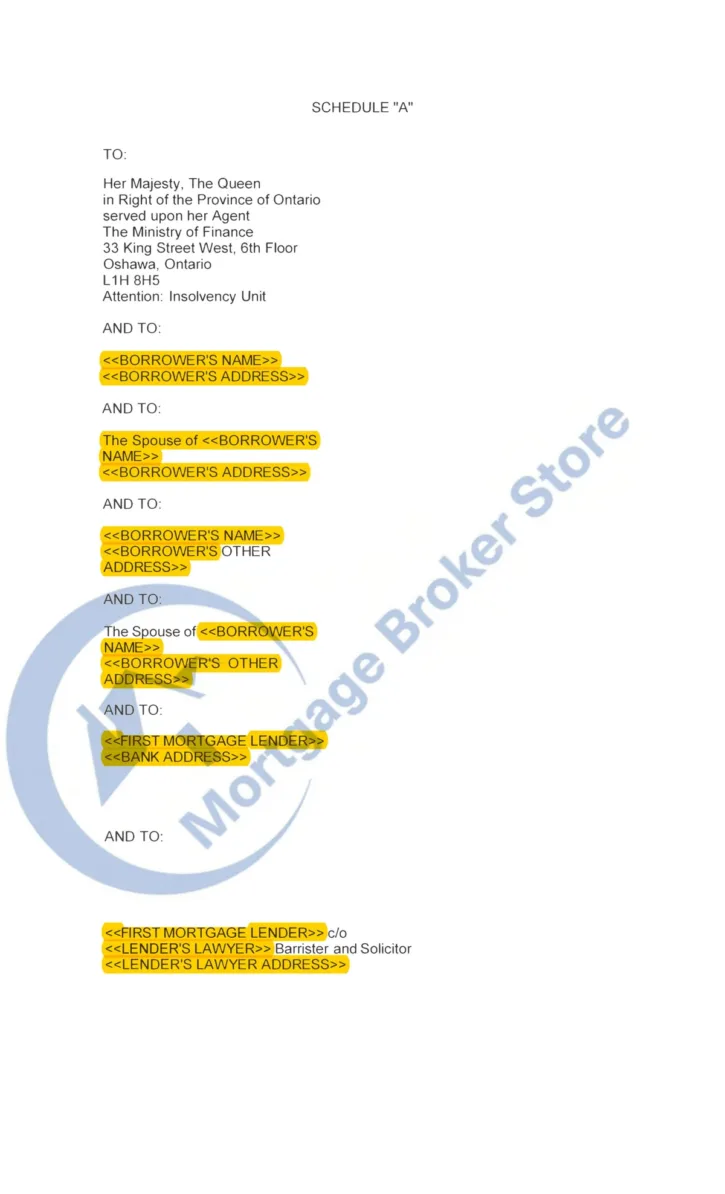
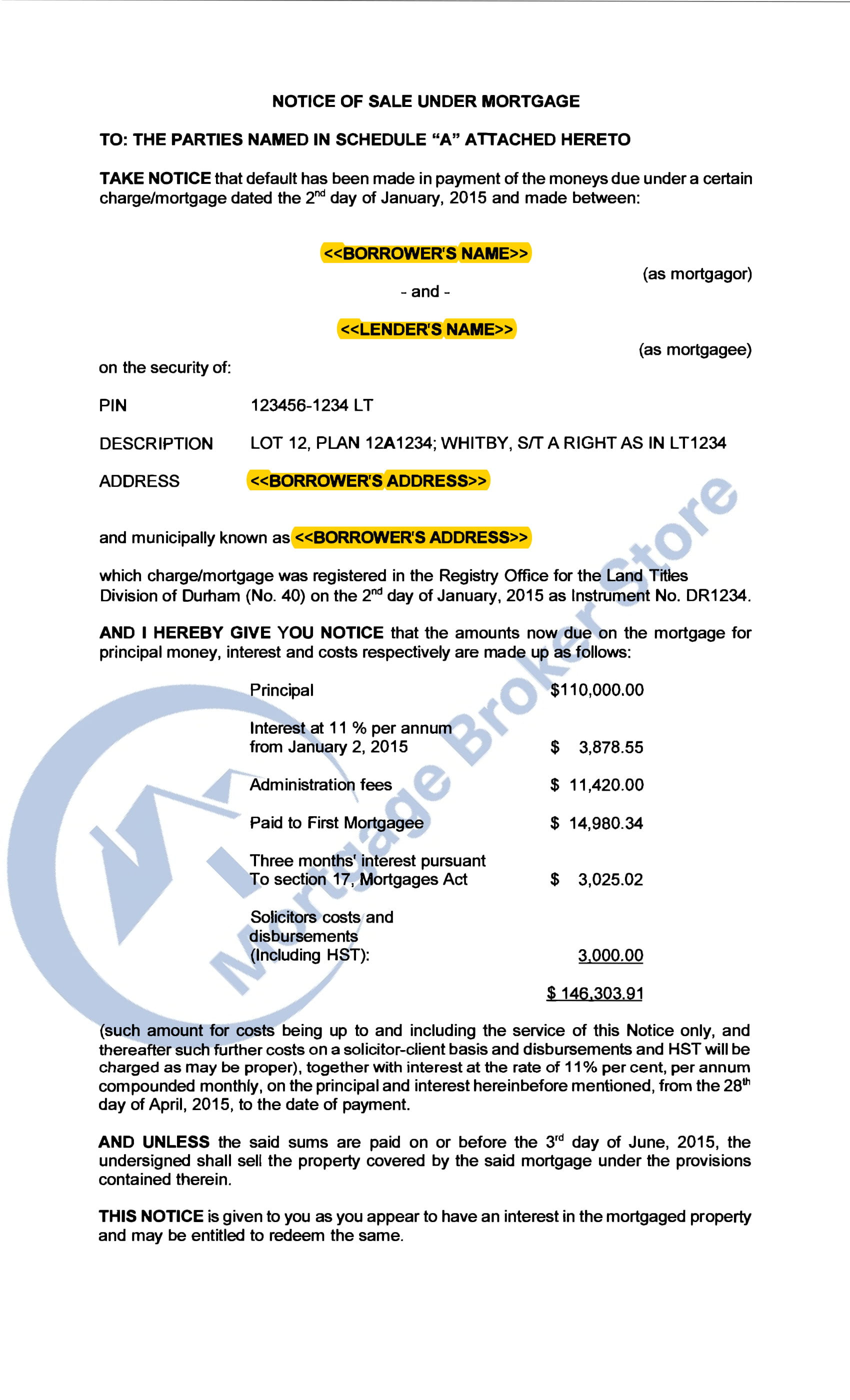
Notice of Sale
A Notice of Sale Under Mortgage is the document that opens Ontario’s power of sale process. The lender’s lawyer sends it by registered mail once a mortgage default has lasted at least 15 days, and it starts a redemption period of at least 35 days (40 if a spouse occupies the home). If you have received one, paying the amounts listed within that window stops the process entirely — our guide What is a Notice of Sale? explains how.
Ontario Notice of Sale – Example 1
Ontario Notice of Sale – Example 2

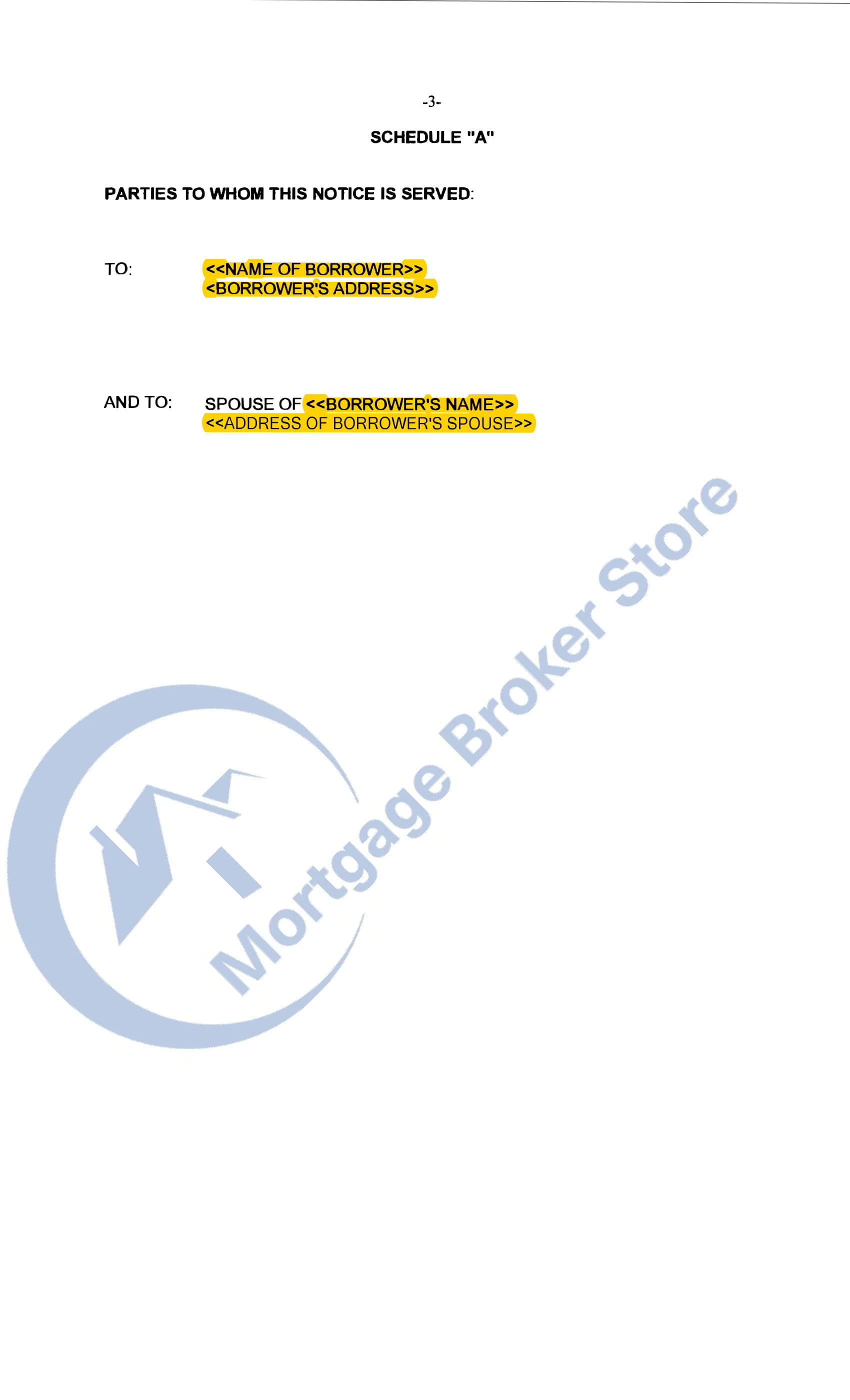
Statement of Claim
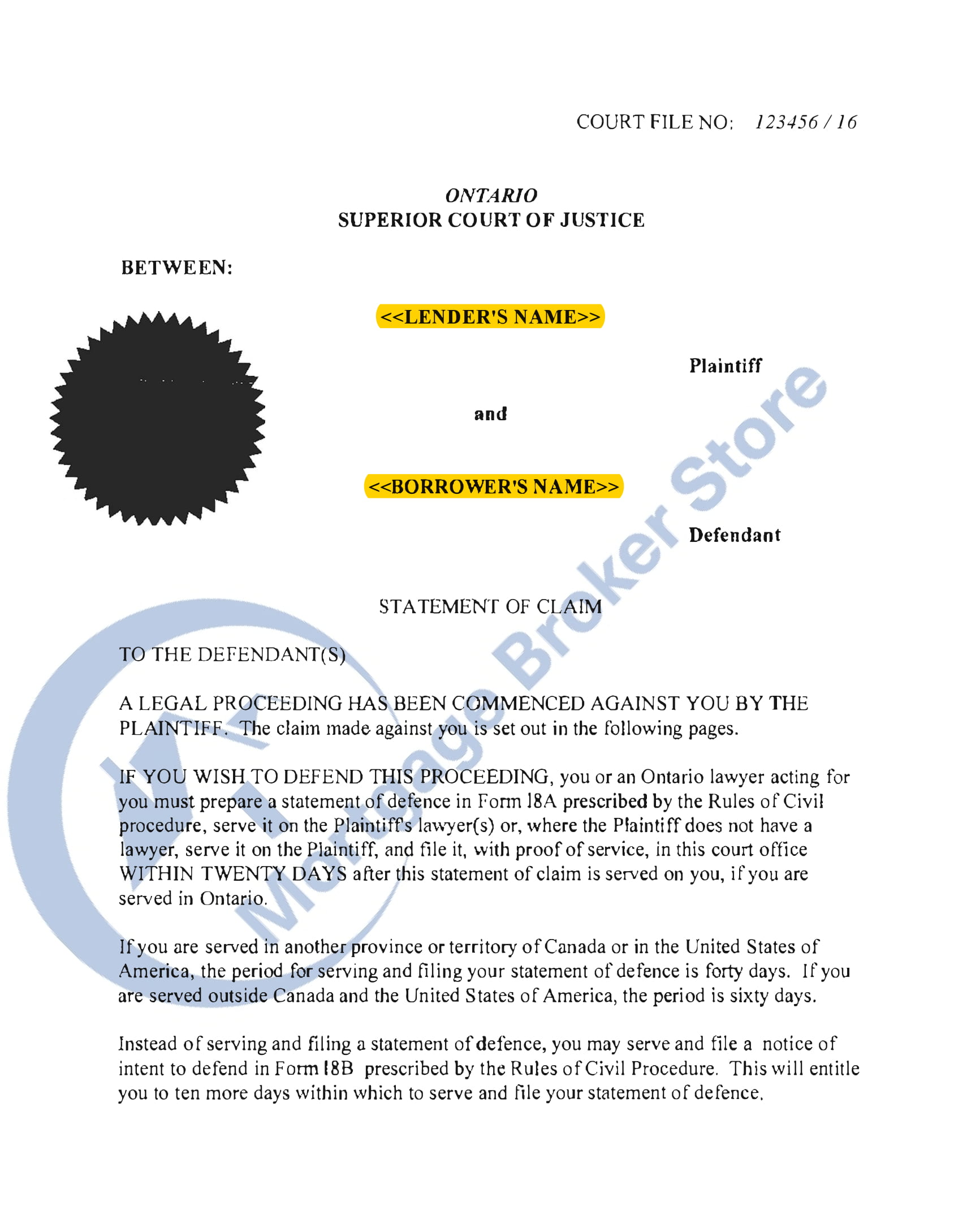
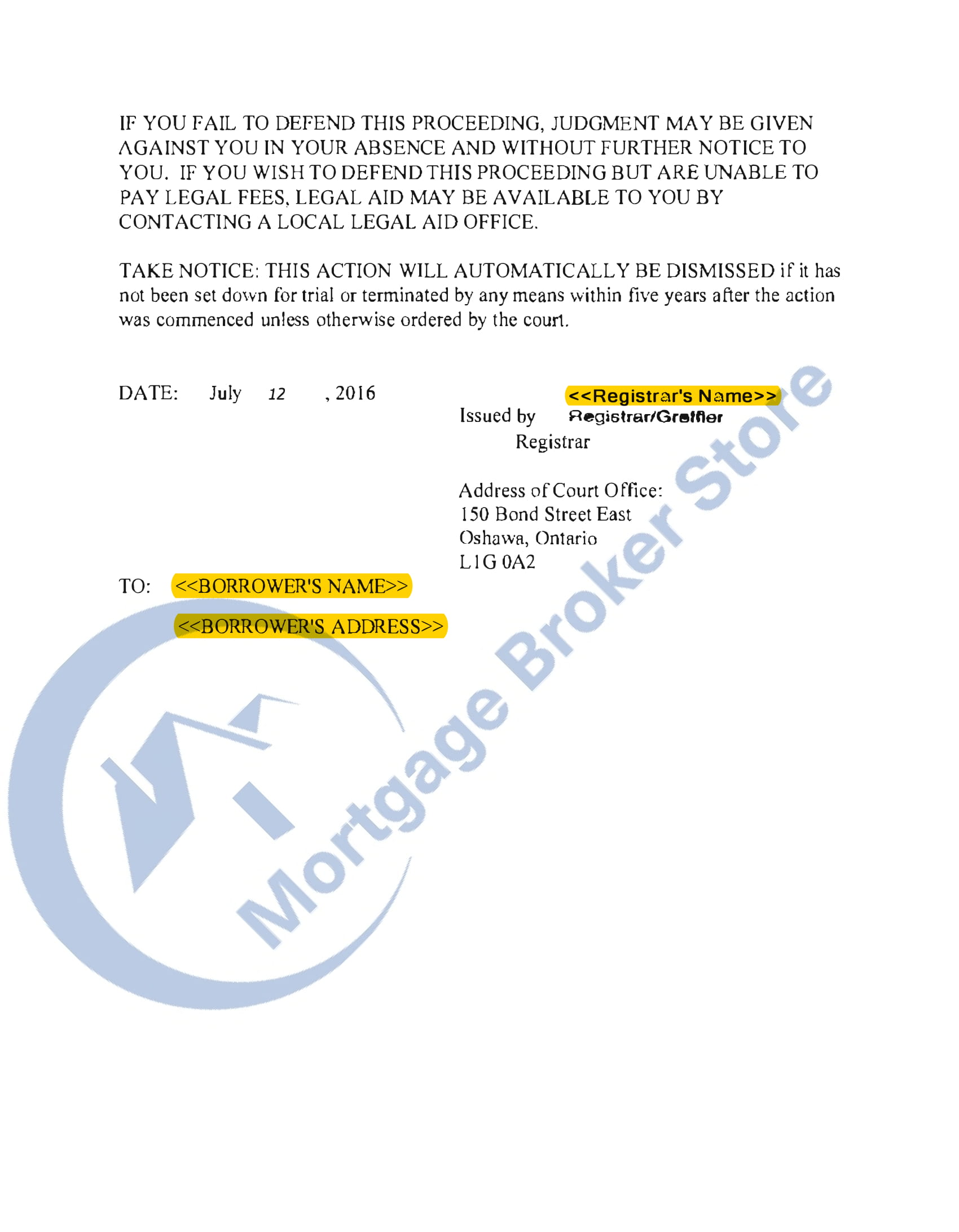
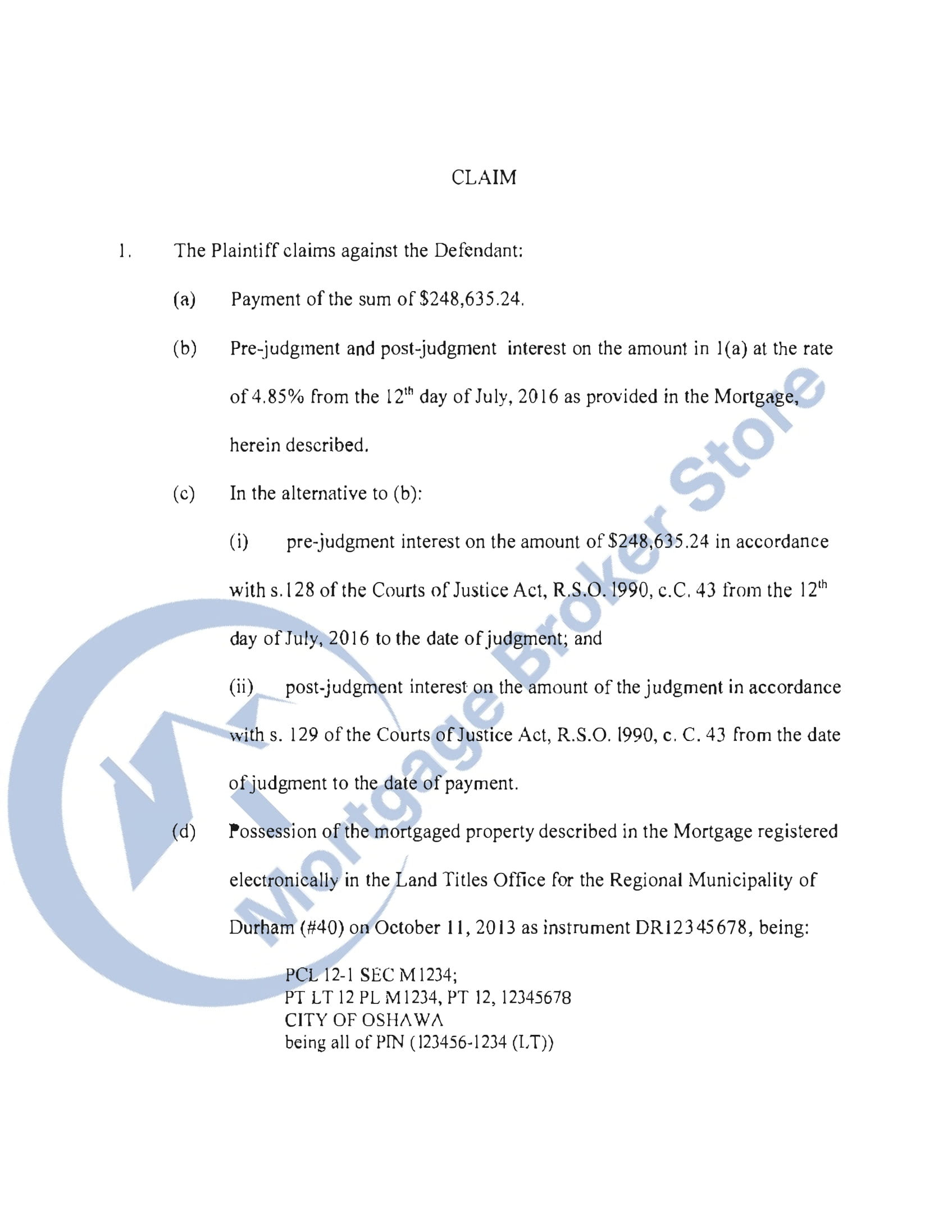
A Statement of Claim is filed with the Ontario Superior Court of Justice by the lender’s lawyers, usually once the Notice of Sale deadline has passed with the debt unpaid. It sues you for the mortgage debt and possession of your home, and you have 20 days to respond with a Statement of Defence. Before that deadline passes, read Should I file a Statement of Defence for my mortgage?
Ontario Statement of Claim – Example 1
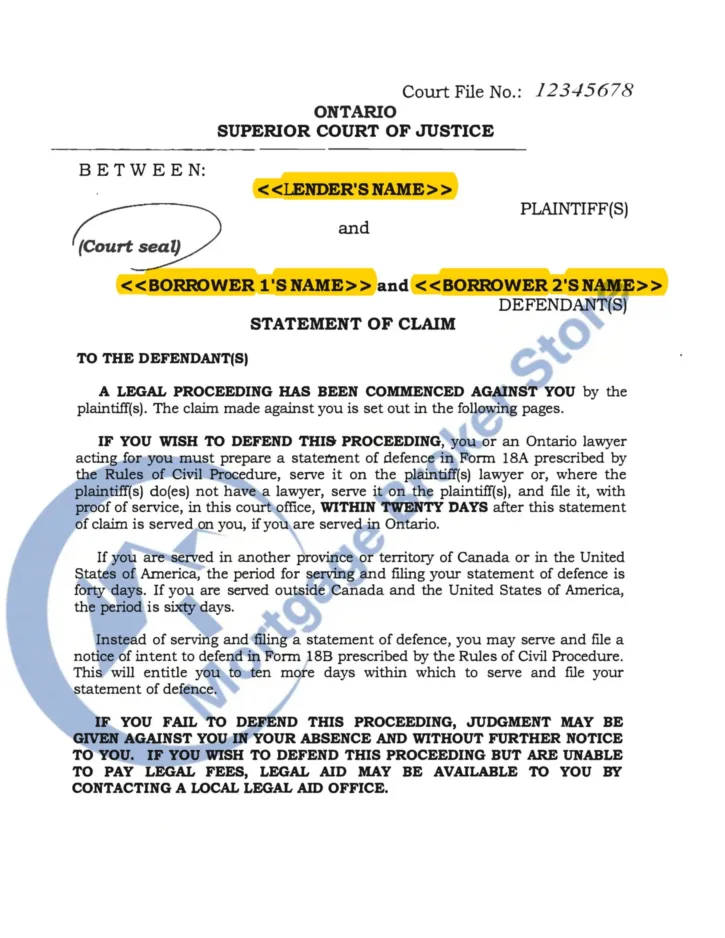
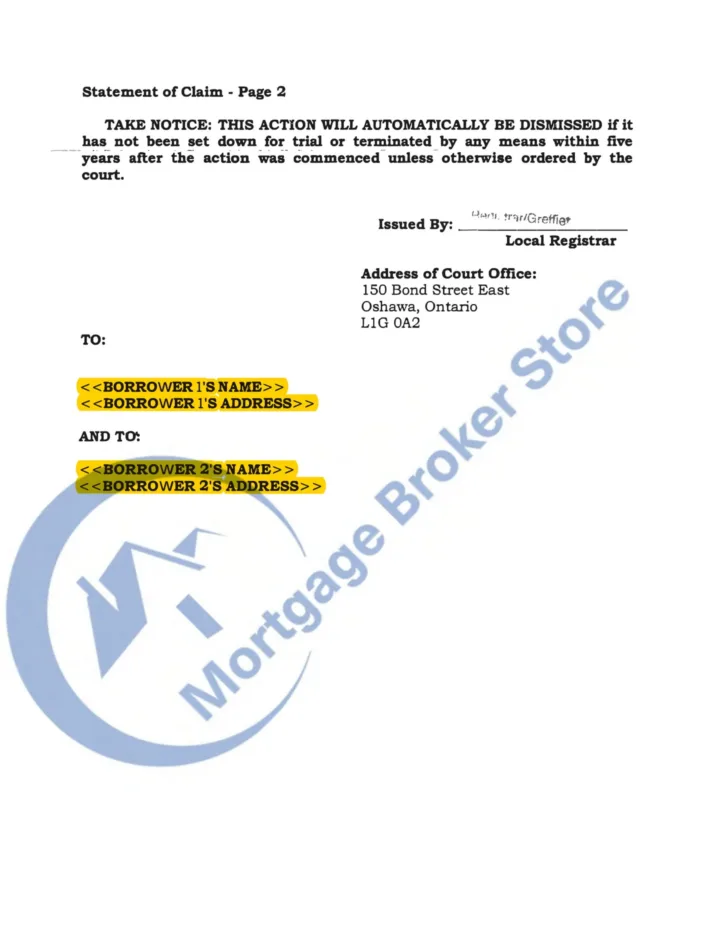
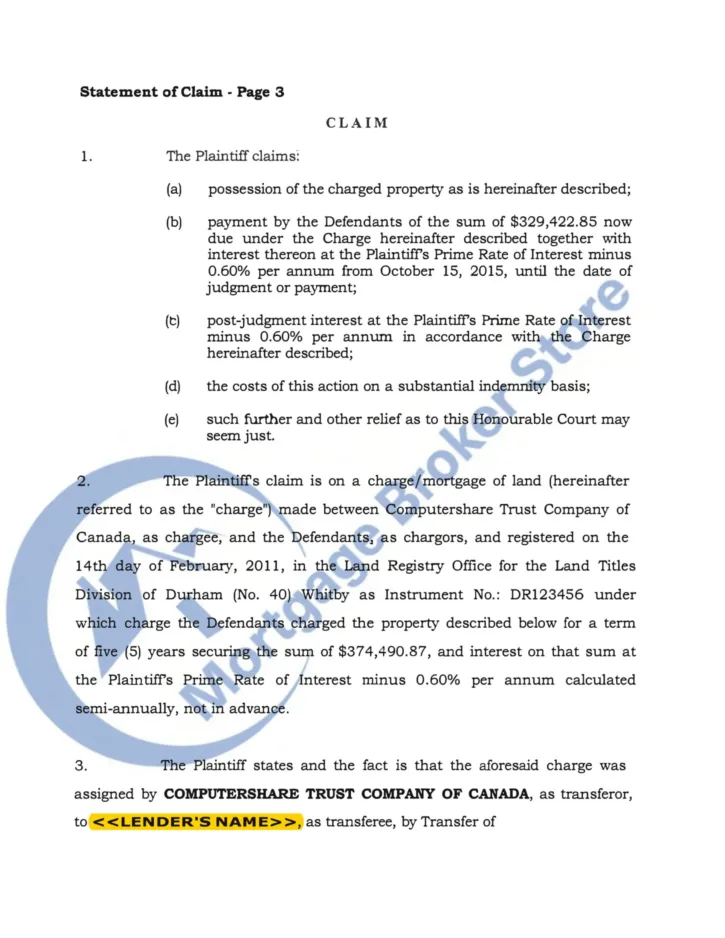
Ontario Statement of Claim – Example 2
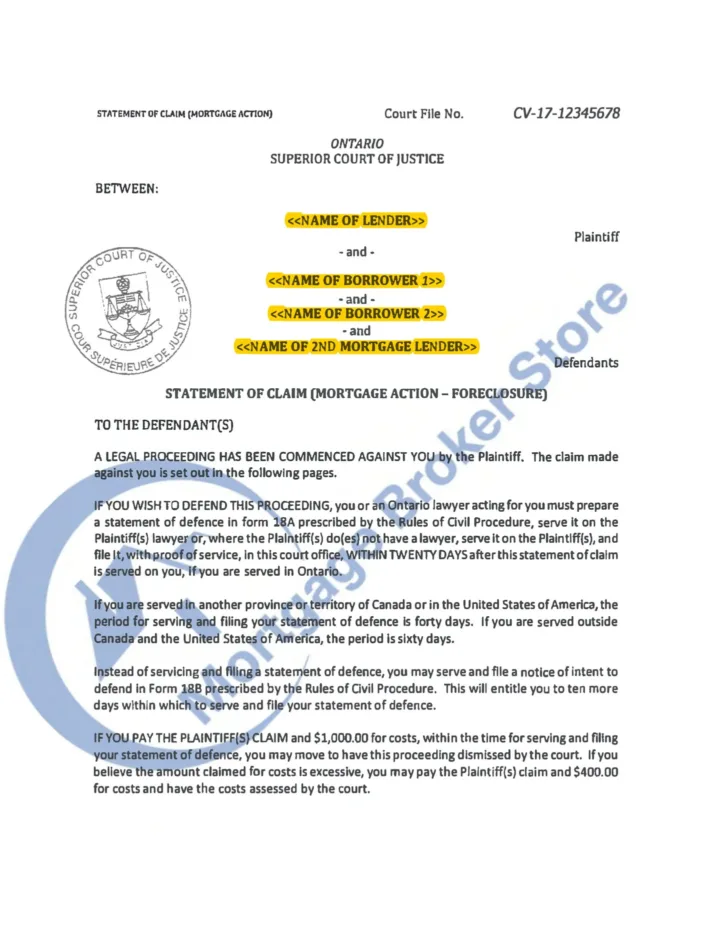
Statement of Claim (Foreclosure)
This is the same court document used to start a foreclosure instead of a power of sale — the first page must state which one the lender has chosen. The difference matters: in foreclosure the lender takes ownership of the property itself, and any remaining equity can be lost. See power of sale vs foreclosure explained, or our guide to stopping foreclosure in Ontario.
Ontario Statement of Claim (Foreclosure)- Example 1
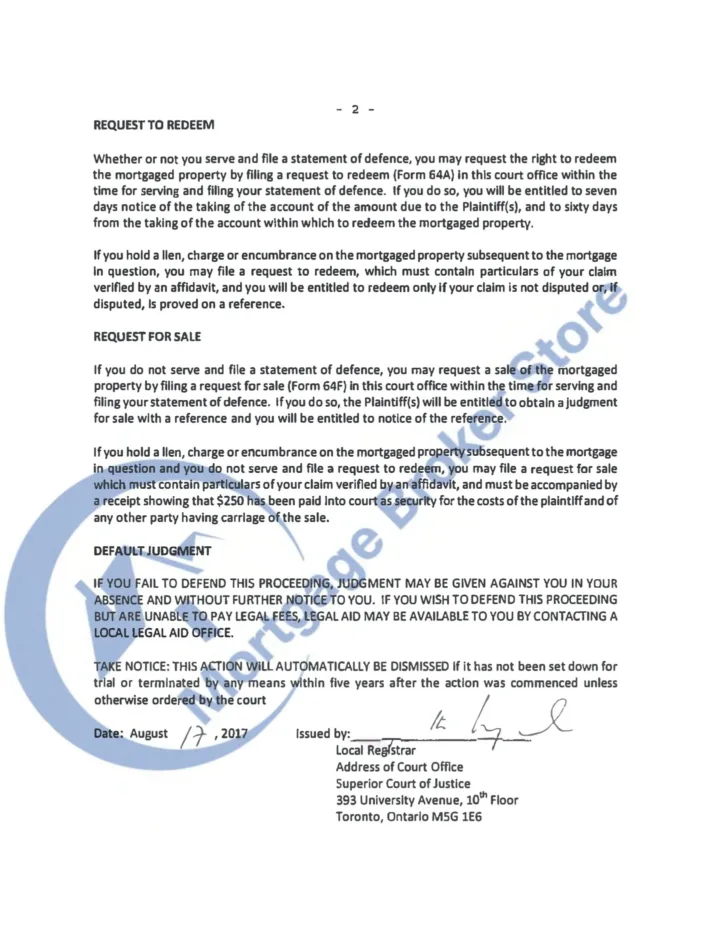
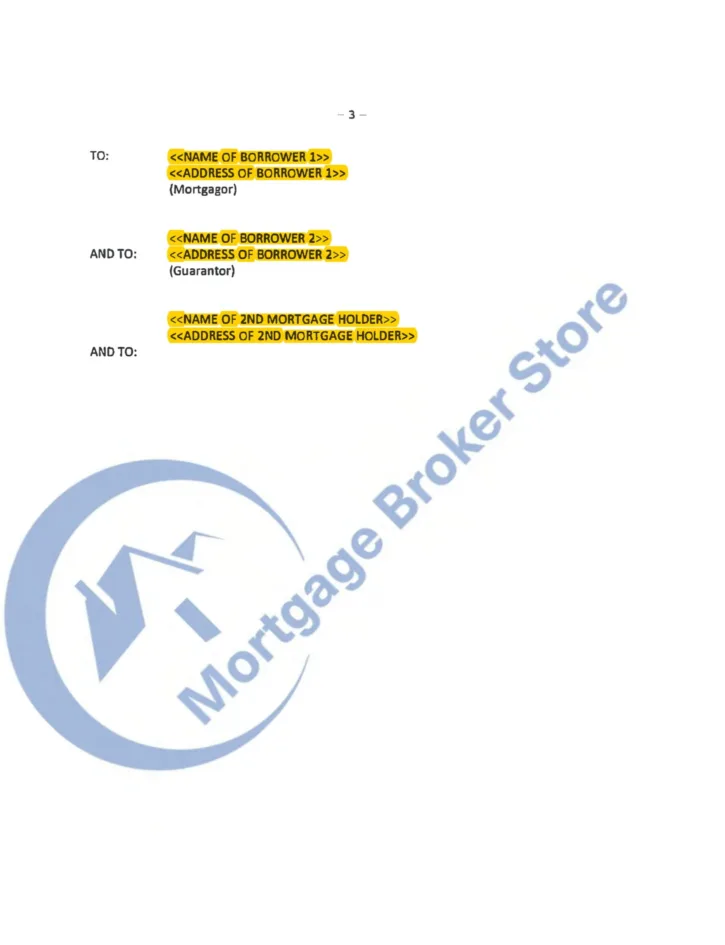
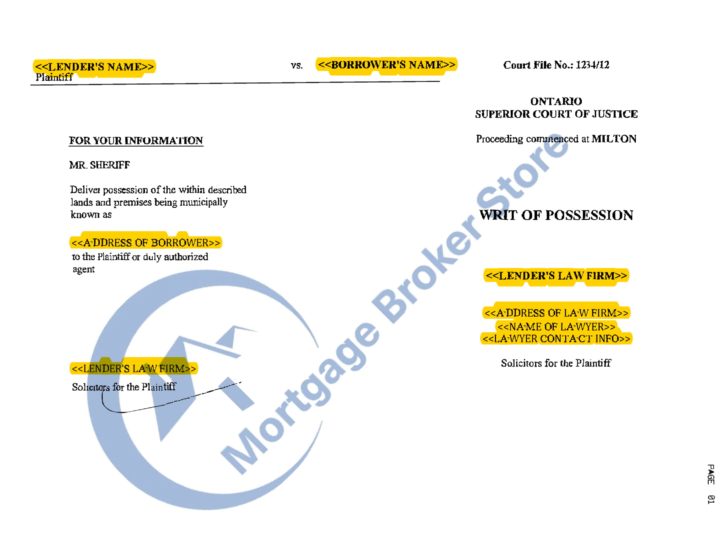
Writ of Possession
A Writ of Possession is a court order from the Ontario Superior Court of Justice authorizing the local sheriff to remove everyone from the property. Lenders obtain it after winning a judgment, most often by default when no Statement of Defence was filed. If you have received one, the sheriff can act within weeks, so get advice immediately — see What is a Writ of Possession?
Ontario Writ of Possession – Example 1
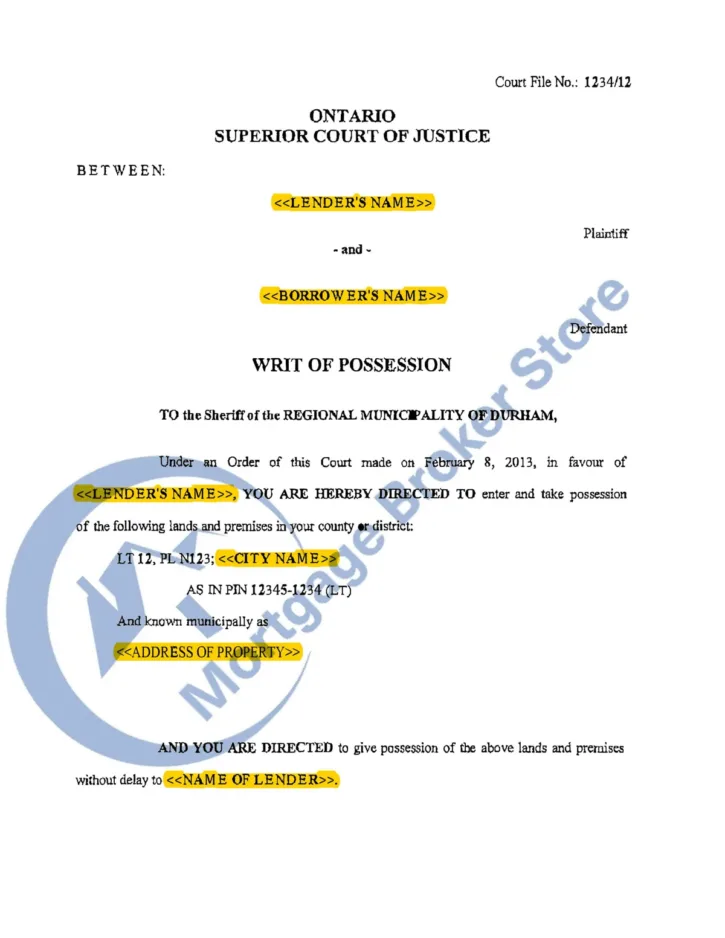
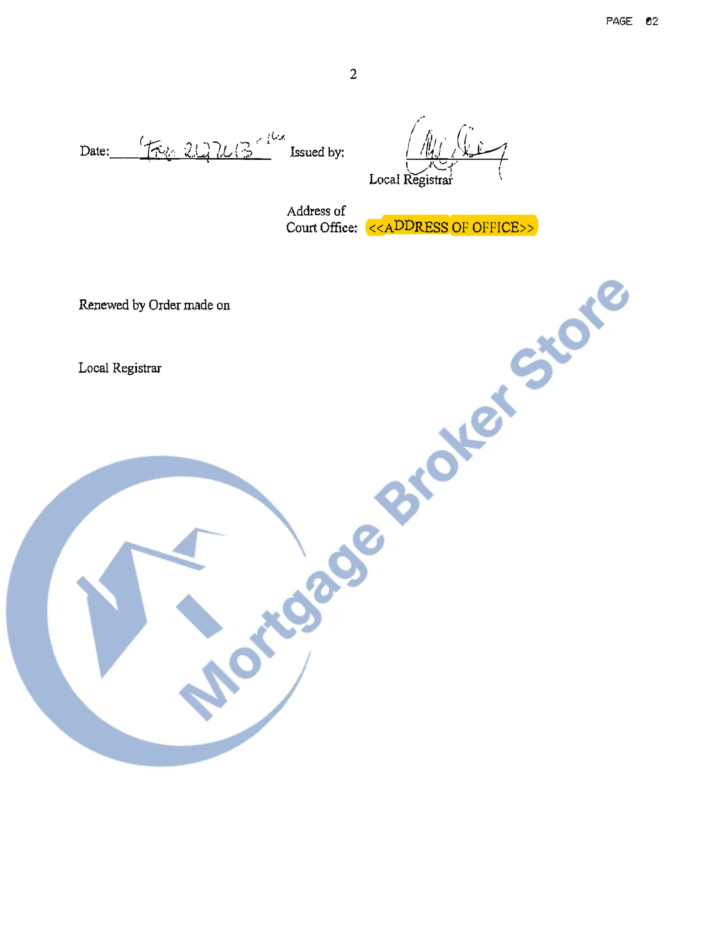
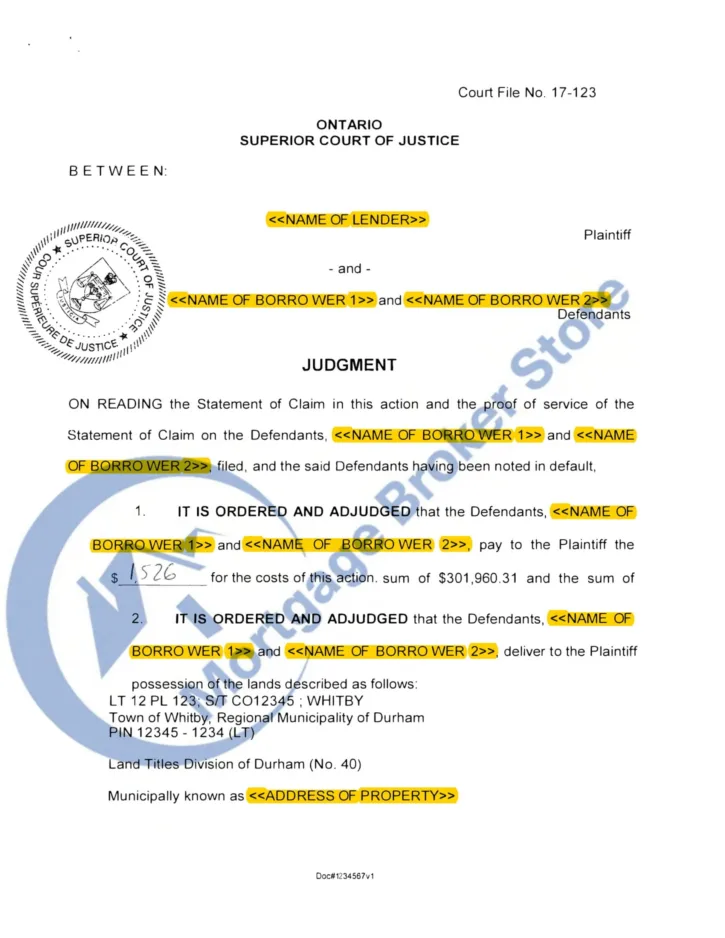
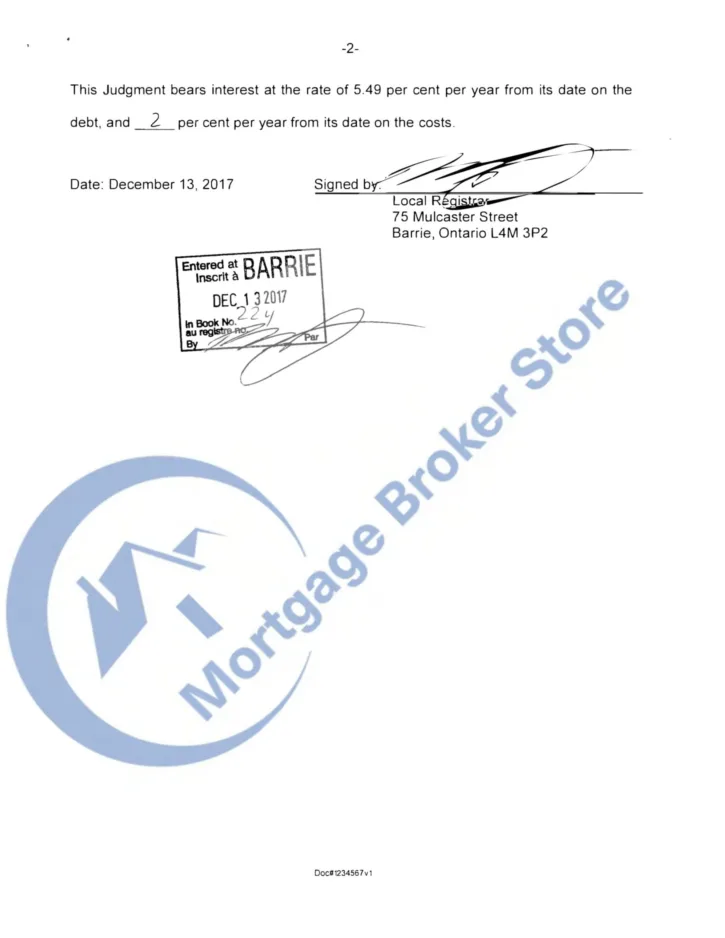
Judgment for Possession
A Judgment for Possession is the court ruling that gives the lender the legal right to take possession of your home, usually granted by default when the 20-day deadline to defend a Statement of Claim passes. Once granted, the lender can ask the court to issue a Writ of Possession right away. Our guide What is a Judgement for Possession? covers your remaining options.
Ontario Judgment for Possession – Example 1
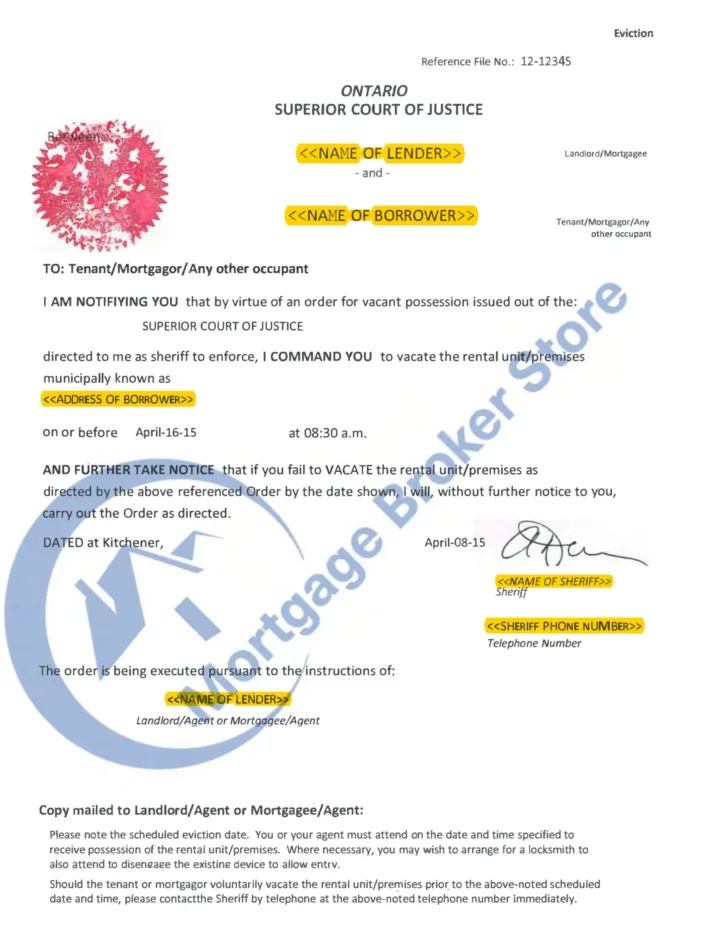
Eviction Notice
An eviction notice in a power of sale is delivered on behalf of the lender once it is entitled to possession, telling the occupants of the property when they must leave. It is the last warning before the sheriff enforces a Writ of Possession. If you have received one, the date is close — read What is an Eviction Notice in Ontario? and get advice the same week.
Ontario Eviction Notice – Example 1
Notice of Intention
A Notice of Intention is an early warning letter from the lender or its lawyer stating that enforcement will start if the mortgage default is not fixed. It usually arrives before a Notice of Sale, before significant legal costs have been added to the mortgage. Acting at this stage — bringing the mortgage current, refinancing, or negotiating with the lender — leaves you the most options; see how the power of sale process works.
Notice of Intention Example


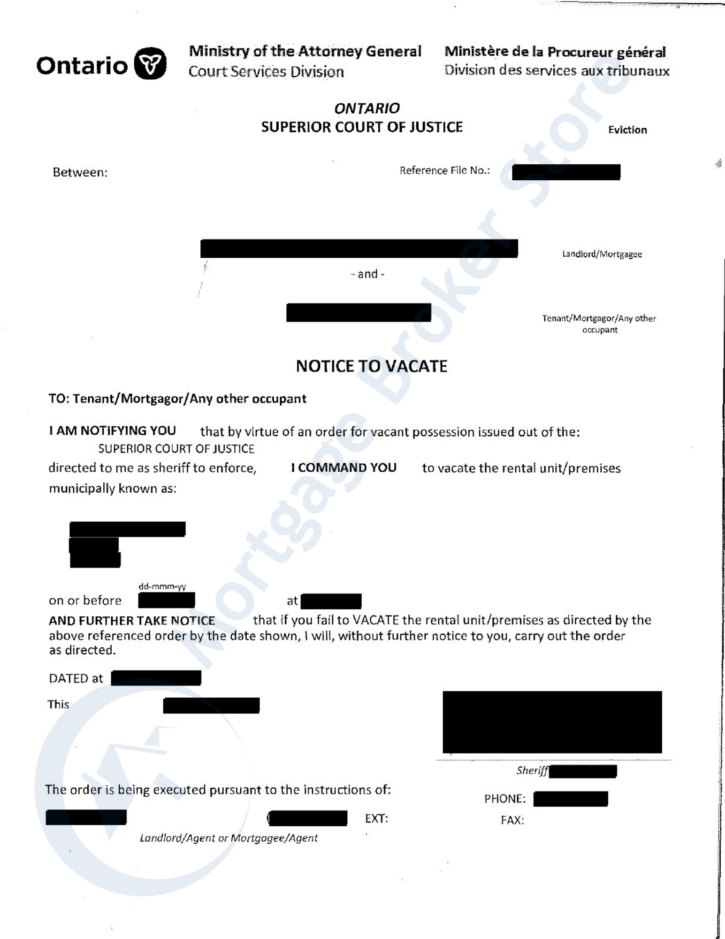
Notice to Vacate
A Notice to Vacate tells the occupants of the property the date by which they must move out. It is typically delivered once the lender holds a Writ of Possession filed with the local sheriff’s enforcement office. If you have received one, the date on the notice is enforceable — contact us or a lawyer immediately, and check which enforcement office serves your area.
Notice to Vacate Example
Notice Demanding Possession
A Notice Demanding Possession — sometimes titled simply “Notice of Possession” — is a written demand that you hand over vacant possession of the property. It is sent on the lender’s behalf once the lender claims the right to possession, most commonly after a mortgage default during power of sale or after the court has made an order for possession. Unlike a Writ of Possession, it is not enforced by the sheriff on its own — it is the formal demand that comes first, and tenants living in the property can receive one as well.
If you have received a Notice Demanding Possession, do not move out — and do not ignore it — without advice. The next step is usually court enforcement, and the window to refinance, pay the arrears, or negotiate with the lender is still open. Call 416-499-2122 for a free consultation.
Notice Demanding Possession Example


Disclaimer: This page is for general informational purposes only and should not be taken as legal, financial, mortgage, or real estate advice. Power of sale and foreclosure matters can have serious consequences, and you should speak with a licensed mortgage professional, lawyer, or qualified advisor before making decisions. Power of Sales Ontario does not guarantee results, mortgage approval, or that the information on this page applies to your specific situation.
View Each Example Document
Open a full example of each document homeowners commonly receive during power of sale, foreclosure, and possession proceedings: