

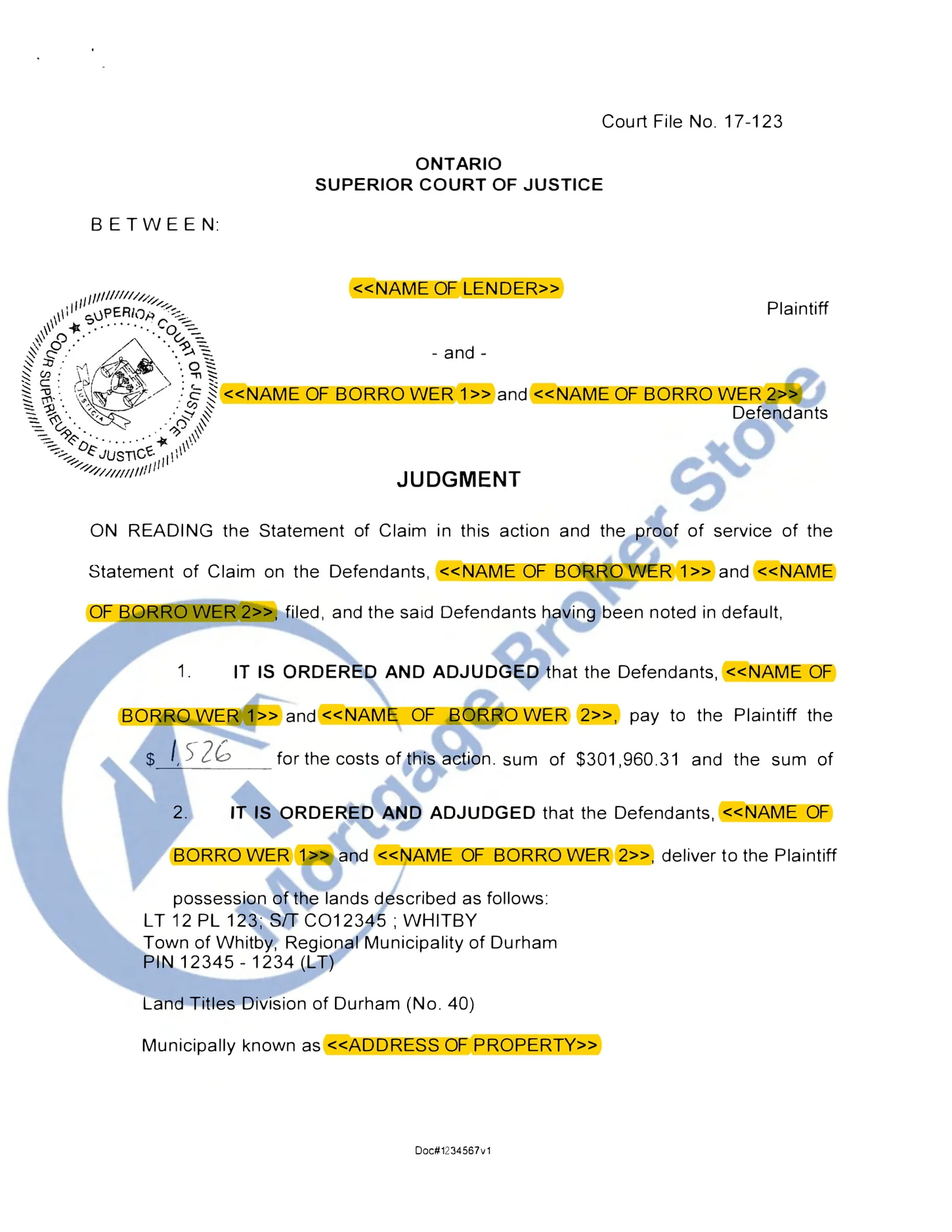
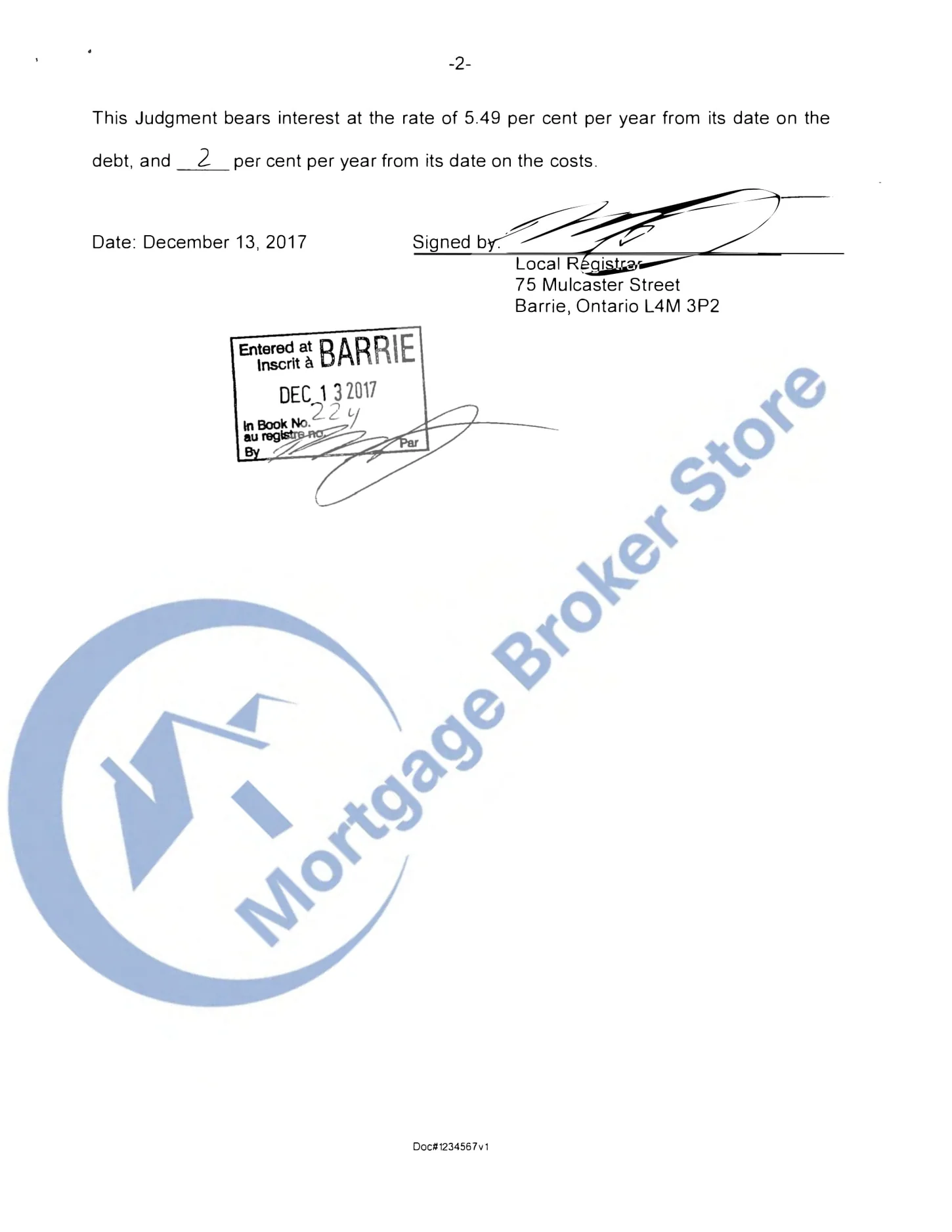
This is a real example of an Ontario Judgement for Possession, with personal details redacted. A lender obtains this court order after a homeowner does not successfully defend the Statement of Claim — it confirms the debt owing and grants the lender possession of the property. Once granted, the lender’s next step is usually a Writ of Possession, which authorizes the sheriff to enforce the eviction.
Learn what this order means and how to respond in our guide: What is a Judgement for Possession?
By the time a Judgement for Possession is issued, the court process is nearly complete — but the homeowner still has not lost the property. Until the sale closes or foreclosure is final, an Ontario homeowner generally retains the right to redeem by paying the arrears or discharging the mortgage, and courts can grant more time in the right circumstances. Acting quickly at this stage, usually with professional help, is what separates homeowners who keep their equity from those who lose it.
Once you have identified your document, you can compare it with every other document used in the process — back to all example documents.